Neuroimmunology, brain health and environmental toxicology

Namdev Shivajirao Togre, Ph.D.

Postdoctoral Scholar, Department of Biobehavioral Health, Penn State

I am a neuroscientist working on neuroinflammation and the blood–brain barrier. For 12 years, I have studied how the immune system shapes disease, from parasites to the brain. Today, I focus on how microplastics and flame retardants affect the developing brain, building on my work showing how alcohol and e-cigarettes switch on the brain's immune cells through P2X7R signaling and extracellular vesicles, and why males and females respond differently.

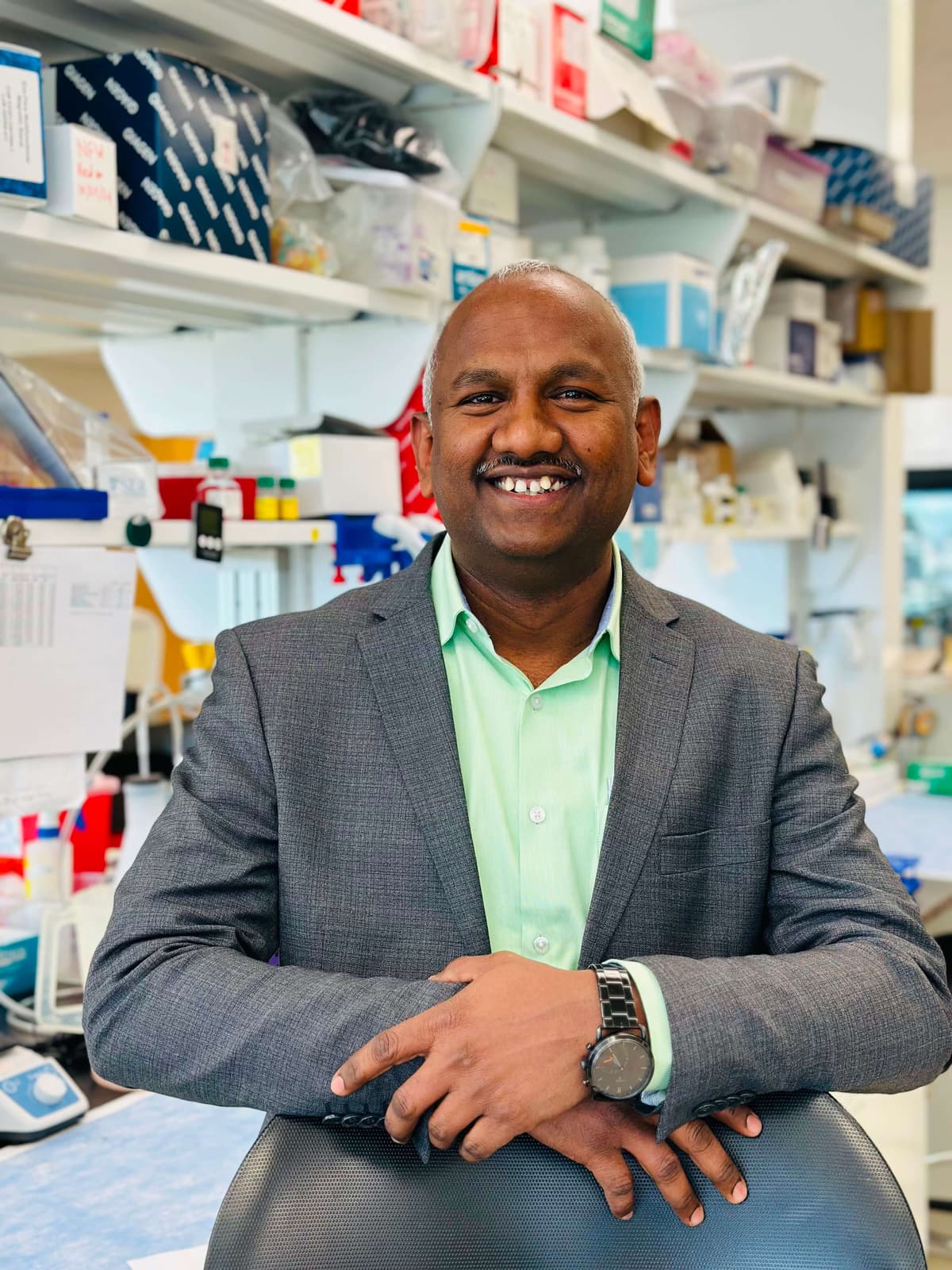
Portrait of Namdev Shivajirao Togre, Ph.D.

About

At Penn State I am studying how perinatal exposure to microplastics and organophosphate flame retardants changes learning, memory and stress circuits in adult offspring.

At Temple University I showed that P2X7 receptor signaling contributes to barrier injury during chronic alcohol and e-cigarette exposure, using vapor models, knockout mice and vesicle analysis. Before that, I worked on tuberculosis under BSL-3 conditions and did my PhD on helminth-derived proteins as therapies for colitis. In total, I have about twelve years of experience in rodent models, behavior, molecular biology, immunology and compliance.

Recent

  1. Three papers on alcohol, e-cigarettes and the blood–brain barrier, two as first author, in NeuroImmune Pharmacology and Therapeutics, IJMS and Cells.
  2. Topic Editor for a new Frontiers in Molecular Biosciences research topic on host–pathogen interactions and neuroinfection, now open for submissions.
  3. Co-authored abstract on P2X7R in neuropsychiatric lupus, The Journal of Immunology.
  4. Co-authored presentation on e-cigarettes, alcohol and P2X7 signaling, Society on NeuroImmune Pharmacology, Annapolis.
11h-index
12i10-index
26peer-reviewed articles
100+manuscripts handled as editor
70+manuscripts peer reviewed

Citations, h-index and i10-index from Google Scholar, as of October 2026.

Research

My work has moved from parasites and tuberculosis, to alcohol and the blood–brain barrier, to environmental exposures and the developing brain. The thread has stayed the same: how the immune system shapes disease.

Current focus

Developmental neurotoxicology

What reaches the developing brain?

Perinatal exposure to microplastics and organophosphate flame retardants, and what it leaves in adult male and female offspring: learning and memory deficits, altered stress circuits, and sex-biased vulnerability where endocrine disruption meets chronic stress.

  • Behavioral testing of learning, memory and stress responses
  • Sex as a biological variable throughout

What excites me: finding out whether exposure in early life leaves lasting, sex-specific marks on memory and stress circuits.

Earlier work

Purinergic signaling and the blood–brain barrier

When does the barrier lose integrity, and how do peripheral signals reach the brain?

How chronic alcohol and e-cigarette exposure injure the barrier. P2X7 receptor signaling and extracellular vesicles link peripheral organs to neuroinflammation, and P2X7 knockout or pharmacologic inhibition protects the barrier and changes behavior.

  • First-author, co-corresponding papers in four journals
  • Lung-to-brain signaling: vesicles released from lung epithelium carry plasminogen activator that injures the barrier
  • Kallikrein–interferon crosstalk and depressive-like behavior in lupus models

What I am proudest of: showing, across four first-author papers, that removing or blocking P2X7R protects the barrier and changes behavior, which points to a possible therapeutic target.

Earlier work

Infection and immunity

How does TB evade the immune system, and can a parasite’s immune tricks become a treatment?

Earlier work on Mycobacterium tuberculosis virulence and immune evasion under BSL-3 conditions, and a PhD on helminth-derived proteins as biotherapeutics for ulcerative colitis and on lymphatic filariasis.

  • Recombinant filarial proteins in DSS-induced colitis
  • Filarial challenge models in Mastomys and jirds
  • Fragment-based drug discovery against mycobacteria

What I am proudest of: turning a parasite’s immune trick into a treatment. Filarial proteins calmed colitis in mouse models, and the review that followed became a Vaccines cover story.

Research vision

Over the next five years, I want to understand how environmental plastics act on the brain’s immune system, and why some brains are more vulnerable than others. I plan to combine computational, cell, animal and human-relevant models to move from exposure to mechanism to behavior. Because plastic exposure is now lifelong and unavoidable, this work speaks directly to brain health across the lifespan.

This direction builds on both parts of my postdoctoral training, immune and vesicle signaling at Temple and developmental exposure and behavior at Penn State, and brings them together into a question of my own.

Funding in preparation

  • NIH/NIEHS R21, Principal Investigator
  • Penn State Internal Postdoctoral Research Competition, Principal Investigator

Publications

26 peer-reviewed papers and 2 book chapters. Six selected papers are shown first; choose All to see the full list. Each title links to the full text.

    Experience

    Postdoctoral

    Postdoctoral Scholar

    Developmental Neurotoxicology and Stress Neurocircuitry · Department of Biobehavioral Health, Penn State

    Perinatal microplastic and OPFR exposure, learning, memory and stress circuits in male and female offspring; helping set up the lab's cell culture, barrier model and breeding colony.

    Postdoctoral Fellow

    Preclinical Neuroinflammation and Blood–Brain Barrier Studies · Department of Pathology and Laboratory Medicine, Lewis Katz School of Medicine, Temple University

    Led rodent studies of chronic intermittent ethanol and e-cigarette co-exposure. Designed vapor exposure models, wrote IACUC protocols and SOPs, kept a P2X7 knockout colony, and mentored graduate students. Contributed to cannabinoid vapor (THC and CBD) and lupus behavior studies.

    Postdoctoral Researcher

    Infectious Disease Research · University of Texas at El Paso

    Mycobacterium tuberculosis virulence and host immune evasion under BSL-2, BSL-3 and ABSL-3, with qPCR, confocal microscopy and IVIS imaging of dissemination. Wrote infection SOPs and trained junior researchers.

    Before the postdoc

    Junior Scientist

    Molecular Biology · Pathkind Diagnostics, Nagpur

    High-throughput qRT-PCR and immunodiagnostic assays under NABL quality standards, with audit-ready documentation.

    Research Associate

    Hepatitis E Virus Monoclonal Antibody Project · National Institute of Virology (ICMR), Pune

    Isolated PBMCs and cloned IgG heavy chain genes from donor samples to characterize neutralizing antibodies against hepatitis E virus.

    Doctoral Research Fellow, Biochemistry

    Mahatma Gandhi Institute of Medical Sciences, Sevagram

    Recombinant filarial proteins as treatments for experimental colitis, and prophylaxis and drug screening for lymphatic filariasis.

    Education

    • 2019Ph.D., Biochemistry, Rashtrasant Tukadoji Maharaj Nagpur University (research at Mahatma Gandhi Institute of Medical Sciences, Sevagram)
    • 2013M.Sc., Biochemistry, Rashtrasant Tukadoji Maharaj Nagpur University
    • 2011B.Sc., Biochemistry, Swami Ramanand Teerth Marathwada University

    Expertise

    Animal models and behavior

    • Chronic intermittent ethanol vapor
    • Automated e-cigarette exposure
    • Cannabinoid vapor exposure
    • Breeding and colony management
    • Knockout colony (P2X7)
    • Colitis, diabetes, arthritis and lupus models
    • Filarial challenge (Mastomys, jirds)
    • Small-animal surgery
    • Perfusion
    • Brain microdissection
    • Brain microvessel isolation
    • Dorsal root ganglia collection
    • Cervical lymph node isolation
    • In situ micropore chambers
    • IP, IV, SC, intradermal, intra-articular and retro-orbital dosing
    • Forced swim
    • Tail suspension
    • Elevated plus maze
    • Open field
    • Barnes maze
    • Y-maze
    • Object recognition and placement
    • Social recognition

    Molecular biology and immunology

    • qRT-PCR
    • Digital PCR
    • PCR arrays
    • RNA isolation
    • Cloning
    • Recombinant protein expression
    • Affinity chromatography and FPLC
    • SDS-PAGE and 2D gels
    • MSD and ELISA
    • Western blotting
    • MTT assay
    • ADCC assay

    Vesicles, imaging and cells

    • Extracellular vesicle isolation
    • Nanoparticle tracking analysis
    • Immunohistochemistry
    • Immunofluorescence
    • Cytospin
    • Confocal microscopy
    • IVIS imaging
    • Human cell culture
    • Transfection
    • PBMC isolation

    Microbiology and parasitology

    • Bacterial culture and growth kinetics
    • Transformation
    • Drug screening and inhibition assays
    • Propagation of Brugia malayi
    • Apoptosis assays (EB/AO, cytochrome c)
    • Lateral-flow diagnostic assays

    Biosafety and compliance

    • IACUC protocols and SOPs
    • Welfare monitoring and humane endpoints
    • BSL-2, BSL-3 and ABSL-3 (Mycobacterium)
    • NABL quality standards

    Computational and analysis

    • Molecular docking (AutoDock)
    • Homology modeling
    • Peptide prediction
    • GraphPad Prism
    • IBM SPSS
    • ImageJ

    Service

    Editorial and review

    • Associate Editor, Virulence (Taylor & Francis); more than 100 manuscripts handled
    • Topic Editor, Frontiers in Cellular and Infection Microbiology
    • Review Editor, Frontiers in Molecular Biosciences and Frontiers in Immunology (Frontiers editor profile)
    • Topical Advisory Panel, IJMS and Life
    • Peer review of more than 70 manuscripts, including PLOS One, Frontiers in Immunology, Gut Microbes, Cells and Virulence

    Special issues

    Honors

    • 2022: Cover story, Vaccines (volume 10, issue 8)
    • 2016: Best Oral Paper, TROPACON, Indian Academy of Tropical Parasitology
    • 2015–2019: Babasaheb Ambedkar National Research Fellowship for Ph.D. research (BARTI, Pune)

    Talks and posters

    • Society on NeuroImmune Pharmacology, Annapolis, 2026 Co-author
    • Global Pathways for Science Students, international webinar, Dharashiv, 2026 Invited
    • Research Society on Alcohol / ISBRA, New Orleans, 2025 Poster
    • Society on NeuroImmune Pharmacology, Omaha, 2025 Co-author
    • Temple University Postdoctoral Symposium, 2025 Oral
    • Temple University Graduate Symposium, 2025 Poster
    • Temple University Postdoctoral Trainee Research Symposium, 2024 Oral Poster
    • Research Society on Alcohol, Minneapolis, 2024 Poster
    • Society on NeuroImmune Pharmacology, Charleston, 2024 Co-author
    • Emerging Trends and Career Opportunities in Biotechnology, Khaja Bandanawaz University, 2023 Invited
    • Indians Speaking from Abroad lecture series, Science College Congress Nagar, Nagpur, 2022 Invited
    • FOCIS, Chicago, 2017 Abstract
    • TROPACON, Pondicherry, 2016 Oral Best Oral Paper

    Mentoring and teaching

    • Mentored twelve trainees in experimental design, laboratory technique, data interpretation and scientific writing
    • Penn State, 2026: Sydney Newman, Julia Kay Schmouder, Emmalee Faith Johnston, Chunbaixue Yang, Skye Petrie-Cameron
    • Temple University, 2023–2026: Nikhita Mogadala, Deborah Grove
    • UT El Paso, 2021–2022: Anna Verghese, Destiny B. Santos
    • MGIMS Sevagram, 2015–2019: Suman Kumar Singh, Arun Rathore, Jayesh Unekar
    • How I mentor: I teach at the bench first, doing the experiment alongside each trainee, and then step back so they can plan and run their own. I expect careful records, honest data and clear writing, and I try to give every trainee a piece of work they can own and present. I measure my success by where they go next: so far, PhD programs, an MD program and industry research.
    • Trainees went on to PhD programs at Penn State and UT El Paso, an MD, and industry research positions
    • Resource person, DBT-sponsored national training course on molecular techniques for infectious disease research, MGIMS Sevagram, 2015 to 2017

    Community, training and memberships

    • Vice President, Temple University Postdoctoral Association, 2025–2026
    • Community Leader, ASM Connect, American Society for Microbiology, 2022–2023
    • GIAN workshop on transgenic animal technology, University of Hyderabad, 2018
    • DBT training course on nanobiotechnology and Drosophila genetics, MIET Meerut, 2017
    • Member of NPA, ASM, Research Society on Alcohol and FOCIS; life member, Society of Biological Chemists (India)

    Good science starts with a question.

    Questions about the research, potential collaborations, or an idea worth discussing? I would be glad to hear from you.

    [email protected]